
Every music release or product generates both expenses and sometimes additional income streams.
Costs typically arise at different stages:
- Production recording sessions, mixing, mastering, artwork, and manufacturing (for physical formats).
- Marketing & Promotion press campaigns, radio plugging, social media ads, video production.
- Distribution & Sales digital distribution fees, shipping, warehousing, and retail margins.
- Operational legal, accounting, or administrative costs linked to releasing music.
On the other side, there may be income beyond direct sales:
- Marketing budgets contributed by partners (e.g. distributors, DSPs, brands).
- License flat fees for syncs, compilations, or other usage rights.
- Subsidies or funding from cultural institutions, grants, or sponsorships.
details allows you to manage both sides:
- Assigning and tracking costs directly to the corresponding release or product.
- Recording and reconciling additional income streams, ensuring they are included in royalty calculations where relevant. This gives a clear financial picture of each release or product.
► Costs
Costs represent all outgoing amounts that reduce the income of a release, product, or track. They can be created manually, imported via Excel, or generated automatically from royalty statements.
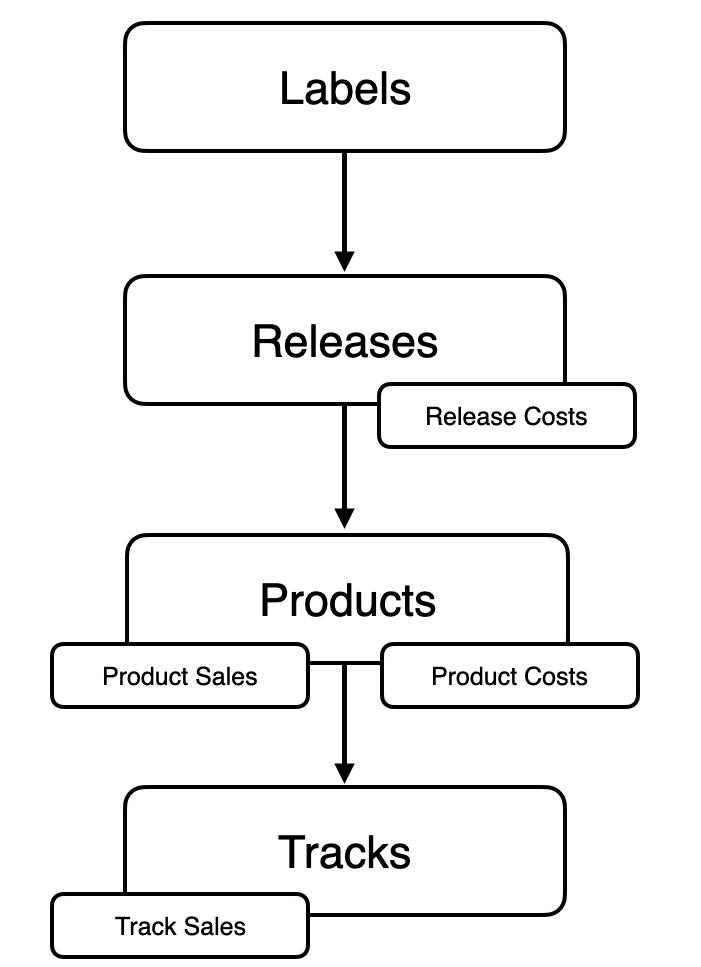
- Cost Groups: Defined under SETTINGS / ACCOUNTING, they structure your costs into categories (e.g. Marketing, Promotion, Manufacturing).
- Advances: A special cost group, always 100% recoupable.
- Recoupment: If costs need to be recouped against royalties, you can define the recoupment rules in the contract setup. More information in the ROYALTY section.
► Income & Other Income
Income normally comes from sales, streams, or licenses. In addition, Other Income can be managed to represent subsidies, sponsorships, or any type of additional funding.
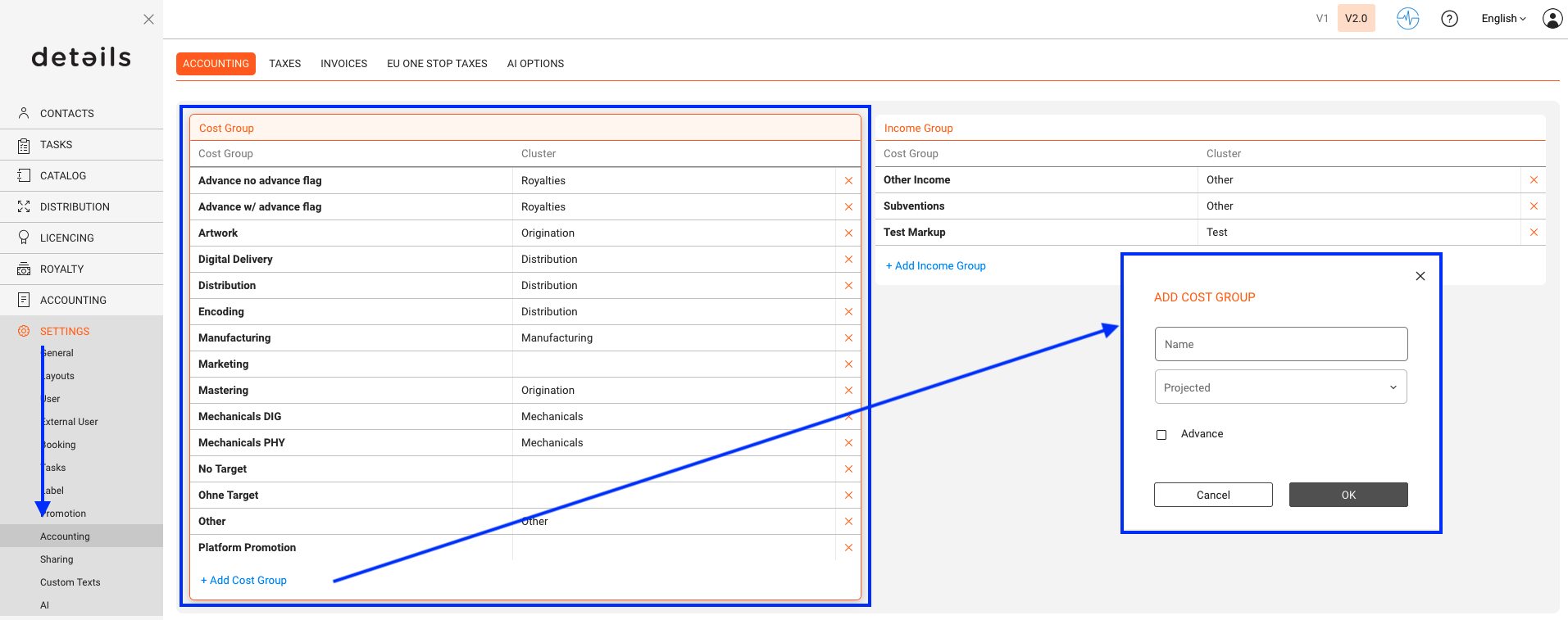
- Income Groups: Defined under SETTINGS / ACCOUNTING, they structure additional income sources and can be assigned to releases and products.
- Contract Logic: As with costs, income can be added globally or assigned to specific groups, depending on the contract.
► Interaction in Catalog
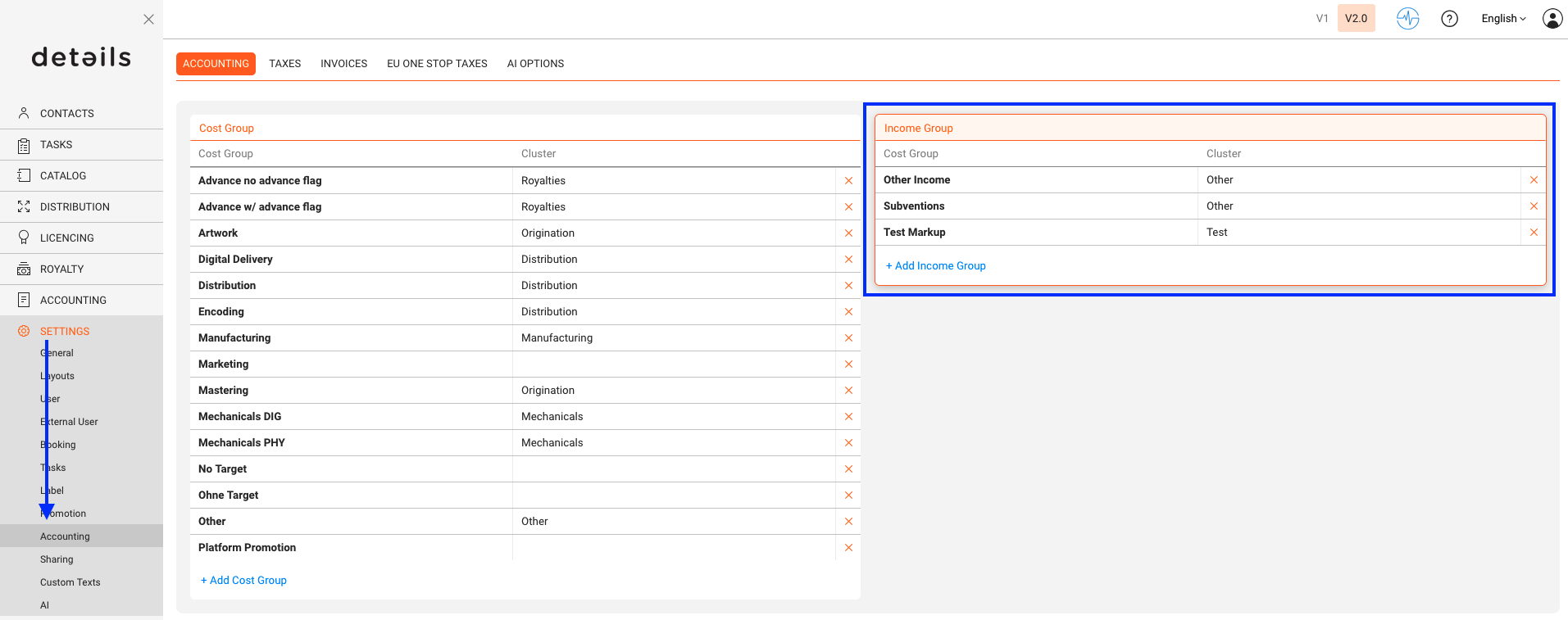
The catalog structure defines where costs and income are placed and how they interact:
- Releases act as the central hub all financial flows are anchored here.
- Products (physical and digital) create costs and income that belong to them.
► Proofs
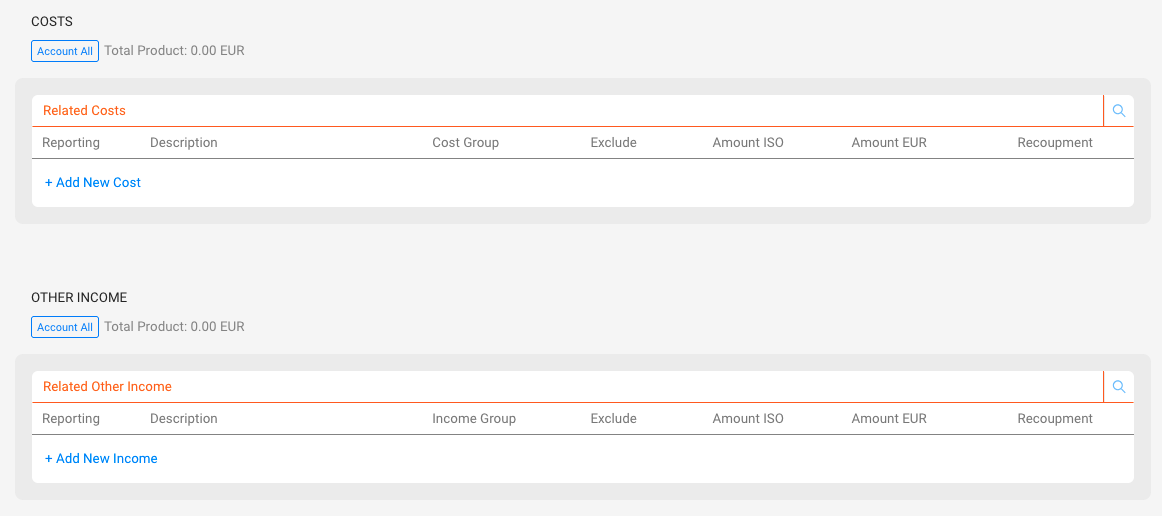
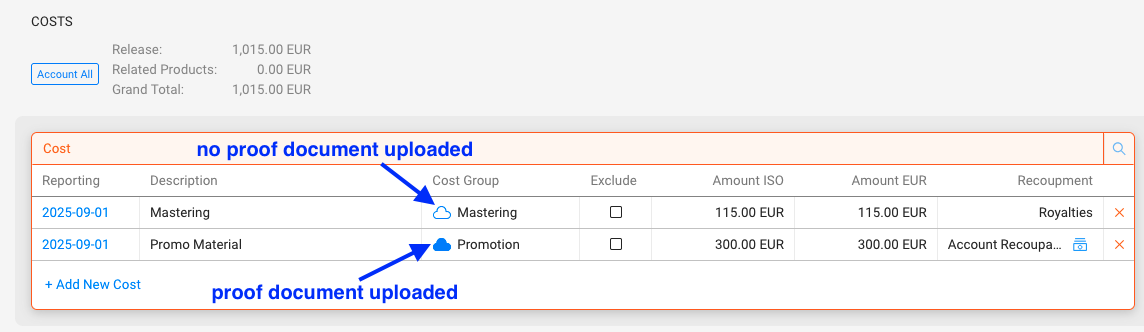
For both Costs and Other Income, you may upload proofs on the Release► and Product level►. These documents ensure transparency and provide traceability for internal use or for sharing with royalty partners or artist managements.
- Invoices and Documents: Attach supporting files directly to financial entries.
- Transparency: Enables partners to review the original documents behind costs or income.
” In details, you can track all release- or product-related costs and record additional income streams (like marketing budgets, flat fees, or funding) for a complete financial overview.
“Costs and Other Income are structured by Groups in SETTINGS / ACCOUNTING.
” Proofs can be attached to Releases and Products for both Costs and Other Income.